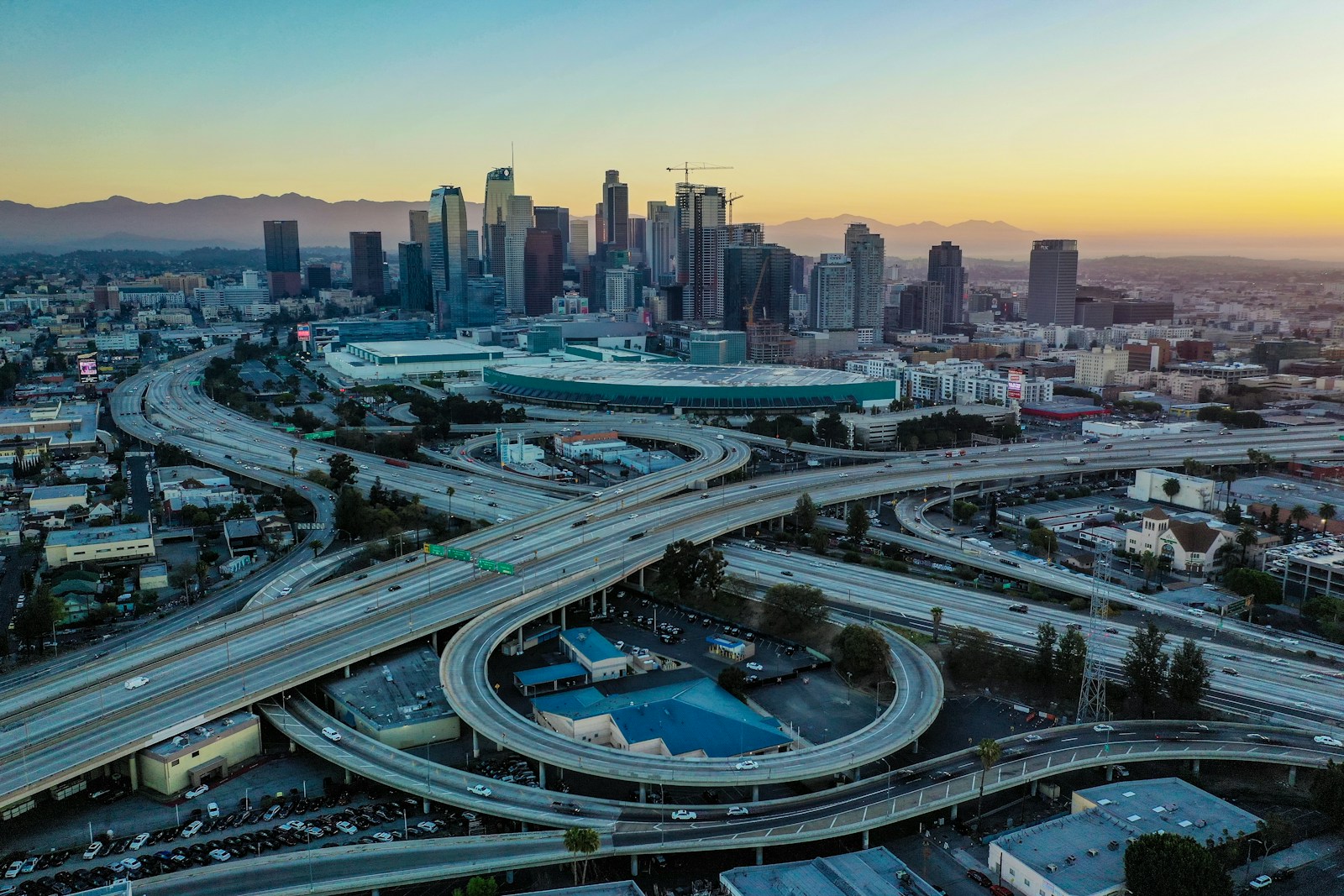
Your GPS just added 20 minutes to your arrival time, the brake lights ahead stretch for a mile, and someone 2 lanes over tries to squeeze into a gap that isn’t there. If it helps, you’re in good company. The typical US driver lost 49 hours to congestion in 2025, 6 hours more than the year before, according to INRIX. That’s more than a full workweek spent looking at the car in front.
While you can’t clear the road ahead, you can get much better at driving through it. Our ranking of the most patient cities in the US shows where drivers’ patience runs out fastest, and the people who cope well in those places tend to drive in similar ways. Below, we cover how to drive in heavy traffic safely, why stop-and-go traffic happens in the first place, and where adaptive cruise control helps (and where it doesn’t).
How do you drive in heavy traffic?
To drive in heavy traffic, keep at least a 3-second gap to the vehicle ahead, watch the brake lights several cars in front, stay in your lane unless you need to move, and let the flow of traffic set your pace.
Leaving enough space is what lets you brake gently instead of suddenly. Scanning means looking through the car in front to the ones beyond it, and checking your mirrors often enough that nothing arrives unannounced. And the driver who keeps calm usually arrives at about the same time as the one who doesn’t, with a lot less stress and wear on the brakes.
Tips for driving in heavy traffic
Time your trip around rush hour
The most effective traffic tip is also the least exciting: avoid the peak if you can. Congestion bunches up around the morning and evening commutes, so shifting your departure time can change the whole drive. The US Department of Energy makes the same point, suggesting drivers stagger their work hours to spend less time in stop-and-go traffic. If you’re visiting a city, consider when the locals commute and save your sightseeing drives for mid-morning or early afternoon.
Build extra time into every trip
Traffic is only stressful when it’s making you late. Give yourself a buffer on any drive through a busy city, and a jam stops being a crisis and becomes part of the plan. The buffer also removes the pressure behind most bad decisions in traffic, like squeezing into a short gap or switching lanes at the last second.
Plan your route before you set off
Set your destination before you pull away. A navigation app or built-in Global Positioning System (GPS) with live traffic data can steer you around delays or road work, and you won’t be tapping at a screen at the next red light. If you’re renting, you can add GPS to a SIXT rental as an extra when you book online. If your route takes in toll roads, our guide to navigating toll roads in the US explains how they work.
Scan ahead and drive defensively
Look past the bumper in front of you. Through its windows, you can usually spot brake lights 2 or 3 cars further up, which gives you earlier warning of a slowdown. Defensive driving in stop-and-go traffic mostly comes down to assuming someone nearby will do something unexpected, whether that’s cutting in without signaling or braking hard for an exit they almost missed.
Check your blind spots before every lane change
Gaps in heavy traffic open and close quickly, and a car can sit in your blind spot for longer than you’d think. Signal, check your mirrors, and look over your shoulder before you move. Better still, change lanes less often. Chasing the faster lane rarely saves meaningful time, and every extra move makes you harder for the drivers around you to observe.
Treat patience as a driving skill
Long stretches of stop-and-go driving test anyone’s patience, so make the car a calm space: put on the podcast you’ve been saving, remain focused on your surroundings, and give grace to the driver who cut in.
Keeping a safe distance in stop-and-go traffic
How tailgating makes stop-and-go traffic worse
If you’ve ever crawled through a jam and found nothing at the end of it, with no crash or road work in sight, you’ve been in a phantom traffic jam. Tailgating is often what creates them.
Massachusetts Institute of Technology (MIT) professor Berthold Horn describes it as a chain reaction. One car brakes suddenly, so the car behind has to brake, then the one behind that. The braking gets harder down the line until somebody comes to a complete stop. Drivers sitting close to the car ahead have no room to ease off gently, so a light tap on the brakes at the front becomes a dead stop further back.
Horn’s proposed fix sounds almost too simple. Instead of watching only the car ahead, each driver would keep adjusting to sit roughly halfway between the car in front and the car behind. His research suggests that if everyone drove this way, we’d all get where we’re going almost twice as quickly. You can’t make every other driver join in, but you can avoid being the one who makes the wave worse. In practice, that means keeping your gap and not rushing to close it whenever it opens.
What is the safest following distance in heavy traffic?
The Evergreen Safety Council recommends a following distance of at least 3 seconds. To check yours, pick a fixed point like a road sign and start counting when the car ahead passes it. If you reach the sign before you get to 3, drop back.
3 seconds assumes good conditions. A handy rule of thumb is to add a second for each thing working against you, such as rain, darkness, or a bigger vehicle than you normally drive. NHTSA safety guidance also calls for a longer gap in bad weather, in low visibility, and when you’re driving a larger vehicle.
At a full stop, leave enough room to steer around the car ahead.
How adaptive cruise control helps in stop-and-go traffic
Standard cruise control holds a single speed, which works well on an open highway but is less useful in a jam. Adaptive cruise control reads the road ahead instead. Sensors track the distance to the vehicle in front, and the car uses its engine and brakes to hold a safe gap as traffic slows, then speeds back up to your chosen speed as it clears.
How to use adaptive cruise control in traffic
Start with the gap setting and choose one of the longer options. These systems already tend to leave more space at their default settings than most human drivers do, and the extra room buys you reaction time.
Set your speed to match the flow of traffic, within the limit. Stay in charge, too. Current systems need constant supervision, because they can’t handle everything the road throws at them. Keep your hands on the wheel and your foot close to the brake.
On a long, slow drive, adaptive cruise control takes a surprising amount of effort off your plate. Selected SIXT rental vehicles come with cruise control, so it’s worth checking for if your trip includes long drives through a busy city.
Manual vs. automatic: which is easier in heavy traffic?
In short, an automatic is easier because there’s no clutch to work every few feet. However, driving a manual in traffic is perfectly manageable once you have the technique down.
Driving a manual car in traffic
In slow traffic, first gear does most of the work. Release the clutch gently and the car will creep forward at walking pace, often without any gas at all. What you want to avoid is riding the clutch, meaning holding the pedal halfway down for long stretches. It wears the clutch out and makes your movements jerky, so either commit to moving or come to a proper stop.
When traffic is stationary for more than a few seconds, slip into neutral and hold the car on the foot brake or parking brake to give your left leg a break. On hills, leave a little more room in front, since most manual cars roll back slightly as you pull away.
Driving an automatic car in traffic
Brake with your right foot only. Left-foot braking in an automatic makes it easy to mix up the pedals when things get tense. Easing off the brake lets the car creep forward on its own, which suits a slow-moving line nicely. For short stops, stay in Drive with your foot on the brake rather than shifting into neutral or park each time. If your car has auto hold, use it. It keeps the car stationary once you’ve stopped, so you can rest your foot until the traffic moves.
Most SUVs in the SIXT fleet are listed with automatic transmissions, so visitors can leave clutch control at home.
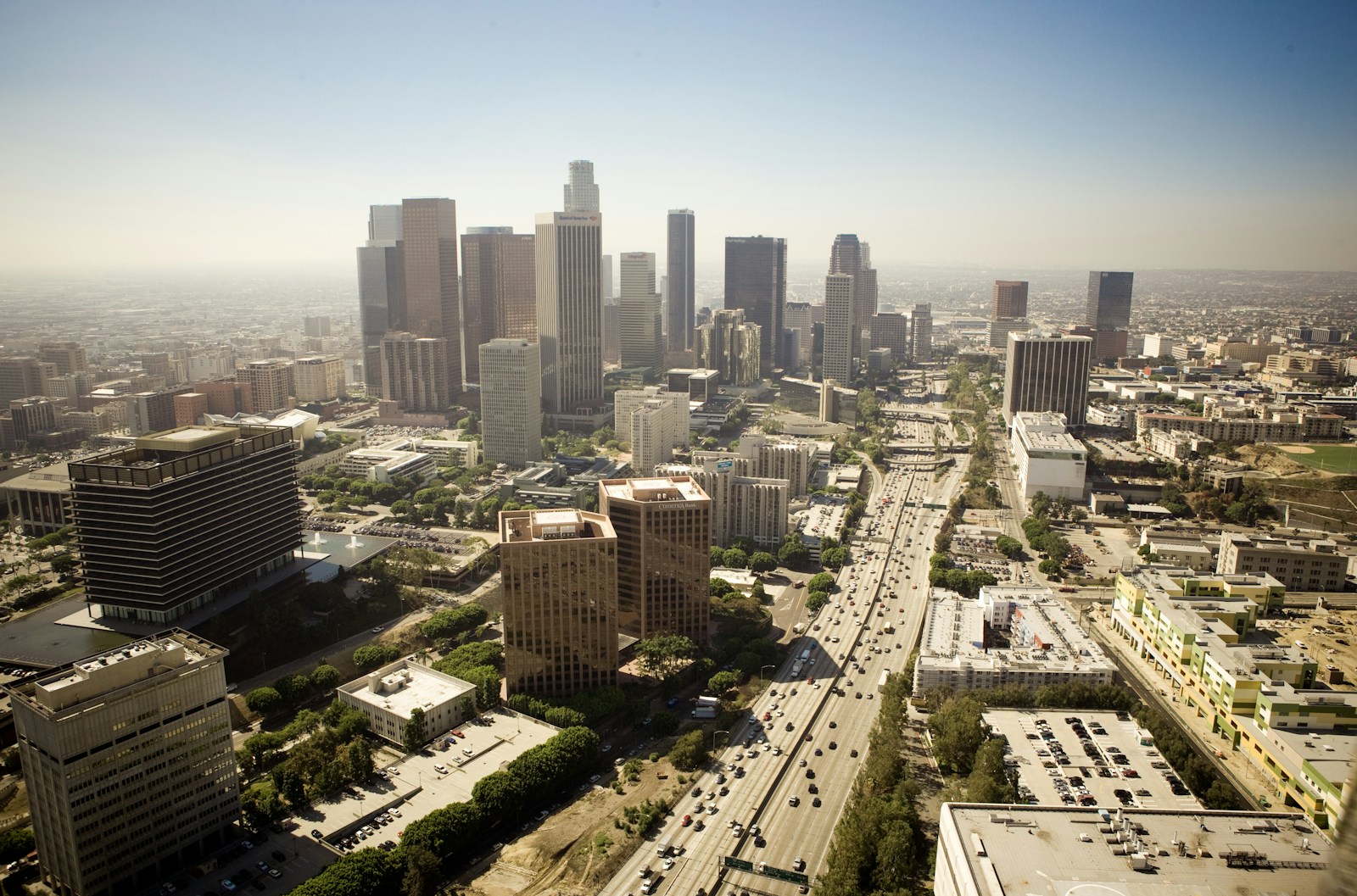
Should you take side streets or stay on the highway at rush hour?
In most cases, you should stay on the highway, even when traffic is slow.
Let your GPS decide. If it shows a genuine time saving on local roads, take it. If not, stay on the highway and let the traffic carry you.
If you have passengers, a high-occupancy vehicle (HOV) lane could be quicker still, and our guide to HOV and carpool lanes explains who can use them and when.
How to reduce fuel consumption in a traffic jam
Stop-and-go traffic is hard on gas mileage, but the way you drive matters more than most drivers expect. According to the US Department of Energy, speeding, rapid acceleration, and hard braking can cut your mileage by roughly 10% to 40% in stop-and-go conditions.
Most of the fix is being gentle. Hard starts burn fuel just to reach the next set of brake lights, so accelerate smoothly. When you see brake lights ahead, lift off the gas early and coast instead of braking late. A longer following distance helps as well. It evens out your speed, which saves gas, and as the MIT research shows, it eases the jam for everyone behind you.
If you’re parked and waiting, switch the engine off, because idling can burn a quarter to half a gallon of fuel an hour. In moving traffic, leave it running.
Drive smarter in America’s most impatient cities
Heavy traffic comes with driving in any big city, but it doesn’t have to ruin the drive. Keep your space, keep scanning, stay cool, and let adaptive cruise control and live GPS take some of the work off your hands.
To see where those habits get tested hardest, check how your nearest city and others rank on congestion, wait times, and traffic searches in our guide to the most patient cities in the US. If you’re heading somewhere busy, browse SIXT’s fleet, with GPS available as an extra and cruise control on selected vehicles. Join SIXT ONE, our free rewards program, and you can check in on the SIXT app and skip the counter, so you can get on the road faster. Expect better, even at rush hour.