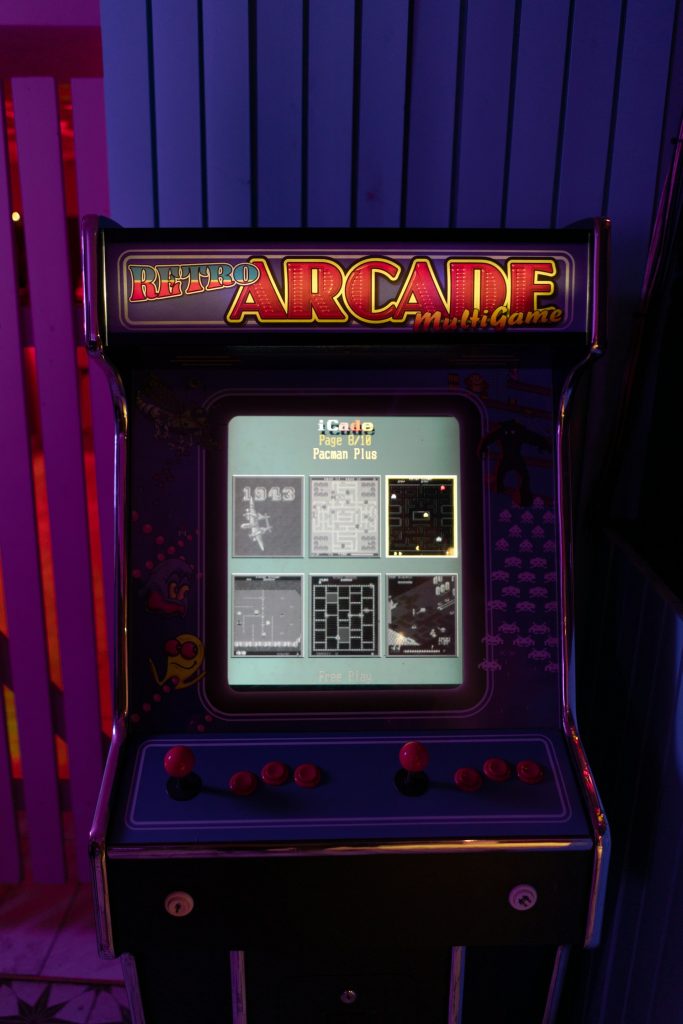
Arcades have long been a defining cornerstone of American entertainment and pop culture. But understanding arcade game history does more than just trigger a wave of nostalgia – it explains the very roots of modern gaming culture in the United States.
Whether you grew up spending your weekends trying to top local leaderboards or you’re just discovering the charm of retro gaming during a cross-country road trip, these neon-lit hubs remain an iconic slice of American travel history. Today, vintage gaming venues and classic cabinets are waiting to be uncovered on your next weekend getaway or coastal drive.
Planning an ultimate gaming route? Check out our guide to the Best Arcades in America to map out your stops.
Timeline of arcade history in America
The story of American arcades stretches from late-19th-century coin-operated amusements on seaside boardwalks to the massive video game boom of the 1970s and 1980s.
- Late 1800s: Early coin-operated mechanical machines make their debut in amusement halls and boardwalks.
- 1930s–1940s: Pinball machines take off, becoming a massive hit across the country.
- 1971: Computer Space launched in 1971 as the first commercially available arcade video game.
- 1972: Atari’s Pong popularized arcade video gaming and became the first major commercial hit of the modern arcade era.
- Late 1970s–Mid-1980s: The “golden age” of arcade gaming launched with legendary titles like Space Invaders, Pac-Man, and Donkey Kong.
- Late 1990s: The rise of powerful home consoles, market saturation, and changing social habits reduce traditional arcade dominance.
- 2000s–Today: Retro arcade bars, family entertainment centers, and interactive museums spark a massive cultural revival.
When were arcades invented?
Long before the term “arcade” was synonymous with glowing pixels and electronic sound effects, it simply referred to a physical space filled with mechanical amusement machines.
Enter the penny arcade. These early venues were collections of coin-operated machines located in bustling amusement parks and seaside boardwalks. Instead of digital screens, these original spaces featured mechanical arcade games. For just a penny or a nickel, patrons could test their luck, strength, or skill on machines that dispensed fortune cards, simple prizes, or brief interactive spectacles.
By the early 1900s, penny arcades had become a staple of major American cities and premier vacation destinations, laying the groundwork for the entertainment hubs we know today.
What was the first arcade game?
Early mechanical arcade games
Before digital technology took over, arcade entertainment relied entirely on mechanical machines. Some of the earliest crowd-pleasers included automated fortune tellers, strength testers, shooting galleries, and mechanical baseball simulators.
The first coin-operated arcade video game
Developed by Nolan Bushnell and Ted Dabney, Computer Space made history in 1971. This futuristic, space-combat simulator became the first commercially sold arcade video game, marking a massive milestone that changed American entertainment forever.
The first mass-market arcade video game
The real breakthrough arrived in 1972 with Atari’s Pong. This simple digital table tennis game became an instant overnight sensation in bars, restaurants, and arcades across the nation. Pong succeeded because it was incredibly easy to pick up, yet highly addictive to master.
The first commercially successful arcade video game
In 1978, Space Invaders arrived on the scene and transformed the industry into a full-blown cultural phenomenon. The game’s relentless waves of alien enemies encouraged endless repeat play and helped popularize high-score competition, establishing score-chasing as central to arcade culture.
When did arcades become a thing in America?
While penny arcades existed for decades, the modern video arcade as we know it absolutely exploded in popularity during the late 1970s and early 1980s.
Suddenly, shopping malls across the United States were anchored by large, high-energy gaming arcades packed with flashing lights, neon signs, and synthesized soundscapes. Teenagers gathered there after school, families made them a highlight of their vacations, and dedicated players traveled to famous arcades and competed for high scores and local prestige.
By the early 1980s, arcades had cemented themselves as one of America’s fastest-growing entertainment industries.
Why are arcades so important to American culture?
Arcades mattered because they were the original social gaming hubs before the internet connected us from our couches. They were vibrant gathering spaces where people came together to socialize, compete, and experience cutting-edge technology that they couldn’t get at home.
Arcades influenced American culture in several major ways:
- Social & Teen Culture: They served as the ultimate community hubs and after-school hangouts for generations of youth.
- Mall & Travel Culture: They redefined the American shopping mall and beach boardwalk experience.
- Media & Design: They heavily influenced the music, movies, television, and aesthetics of the era.
- Tech Access: Arcades introduced many Americans to interactive digital technology for the first time.
- Road Trip Culture: They became essential, affordable roadside attractions for traveling families.
For millions of Americans, arcades symbolized freedom, youth culture, and innovation. They introduced concepts that still define modern gaming, from multiplayer competition and local reputations to immersive digital storytelling.
The golden age of arcade games
The “golden age” of arcade games spanned from the late 1970s through the mid-1980s. During this dazzling era, developers released legendary titles that remain iconic cultural touchstones today, including:
- Pac-Man
- Donkey Kong
- Galaga
- Defender
- Centipede
Rapid advancements in graphics, audio, and game design characterized this period. Arcades became popular attractions in shopping malls and tourist destinations nationwide. It was a time when gaming built real-world communities; players routinely traveled across America to challenge local champions, establish their reputations, and see their initials on the high-score screen.
To experience one of the most influential locations of this era, check out our complete guide to arcades in Chicago, one of America’s most important arcade manufacturing hubs, home to companies like Bally and Midway.
The decline of traditional arcades
By the late 1980s and 1990s, the traditional standalone arcade began to lose its spotlight, thanks to rapidly improving home video game consoles like the Nintendo Entertainment System (NES), Sega Genesis, and later, the Sony PlayStation.
Suddenly, players could enjoy sophisticated gaming experiences from the comfort of their living rooms without needing a pocketful of quarters. Combined with rising commercial operating costs and shifting entertainment habits, many of the classic standalone arcades vanished from American malls and downtown districts.
The arcade revival
While the classic suburban arcade faded, arcade culture never truly disappeared; it simply evolved. In recent years, a massive wave of retro nostalgia has fueled an incredible arcade revival across the United States.
Today, upscale arcade bars, vintage gaming museums, and preservation-focused family entertainment centers are thriving. These venues attract nostalgic adults looking to relive their youth, alongside a brand-new generation of players. From casual weekend crowds to high-stakes competitive fighting game tournaments, the arcade spirit is officially back.
How arcade games shaped modern gaming
The DNA of early arcade history is written all over today’s multi-billion-dollar gaming industry. Many of the world’s top game developers grew up during the golden age and continue to draw inspiration from classic cabinet designs.
Countless modern features were born in the arcade, including:
- Leaderboards and global rankings
- Competitive esports tournaments
- In-game achievement systems
- Cooperative and competitive multiplayer gameplay
- Addictive skill progression mechanics
- Unlockable in-game rewards
Arcades, road trips and the American travel experience
Arcades and the classic American road trip have always gone hand-in-hand. Whether it’s a neon sign catching your eye along a historic highway or a vintage cabinet tucked away in a beachside boardwalk pavilion, arcades are the ultimate roadside attractions. They offer the perfect blend of nostalgia, affordable entertainment, and an excellent rainy-day activity for the whole family.
Incredible gaming destinations are waiting to be discovered along America’s most famous driving routes, from the historic retro arcades along the California coast to massive vintage gaming museums in the heart of the Midwest.
If you’re ready to plan the ultimate driving itinerary, map out your route with our guide to the best gaming vacation destinations on the West Coast, which stretches from the esports arenas of LA to the pinball hubs of Seattle. Alternatively, many of the country’s most iconic vintage gaming cabinets can be found along the original Route 66 road trip, stretching all the way from Chicago to Los Angeles.
Plan your next road trip with SIXT
America’s arcade game history is best experienced on the road. From iconic coastal boardwalks to trendy downtown arcade bars, there are countless destinations where you can get behind the joystick. With flexible rental options, comfortable vehicles and convenient pickup locations nationwide, SIXT makes it easy to plan an unforgettable gaming-inspired road trip. Rent with SIXT, hit the highway, and discover the ultimate roadside attractions, because the journey is always part of the adventure.